The Happy Hosta
Afterglow Hosta
Regular price
$45.00 USD
Regular price
Sale price
$45.00 USD
Unit price
per
Shipping calculated at checkout.
Couldn't load pickup availability
VERY LIMITED, HARD TO FIND
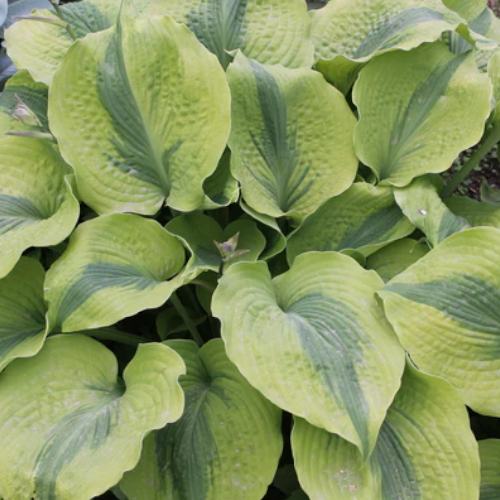
The Afterglow Hosta is a large, low-maintenance perennial known for its striking, heart-shaped green leaves with wide yellow margins that brighten shady garden areas. It produces pale lavender flowers in early summer and is a popular choice for borders and as a specimen plant.
Key Characteristics
- Foliage: The large, heart-shaped leaves have a dark green center and a wide, striking yellow margin that later changes to bright green. The leaves are noted for their heavy texture and corrugation.
- Size: This hosta grows in an upright, mounded clump, typically reaching about 24 inches (60 cm) in height with a spread of up to 4 feet (1.2 meters) at maturity.
- Flowers: Dainty spikes of pale lavender, funnel-shaped flowers rise above the foliage on scapes up to 3 feet tall in early to mid-summer.
- Hardiness: It is hardy in USDA zones 3a to 8b.
- Garden Value: Ideal for woodland gardens, borders, or containers, it provides a bold texture that contrasts well with finer-textured perennials. It attracts hummingbirds and honeybees.
Growing and Care Tips
- Light: The 'Afterglow' Hosta performs best in part sun to light shade conditions, thriving in high-filtered or dappled sunlight. Hot afternoon sun can cause leaf scorch.
- Soil: It prefers rich, moist, and well-drained soil with a slightly acidic to neutral pH (6.5-7.5). Amending the soil with organic matter like compost is beneficial.
- Watering: Consistent moisture is important, especially when newly planted. A minimum of an inch of water per week is recommended, and sandy soils may require more frequent watering.
- Maintenance: This variety is relatively low-maintenance. Old foliage should be removed in the fall or early spring to help control pests like slugs and snails.
- Pests: Slugs and snails are the most common pests. Applying slug bait in early spring as new shoots emerge can help manage their populations. Deer may also browse the foliage.