The Happy Hosta
Hotshot Hosta
Regular price
$23.00 USD
Regular price
Sale price
$23.00 USD
Unit price
per
Shipping calculated at checkout.
Couldn't load pickup availability
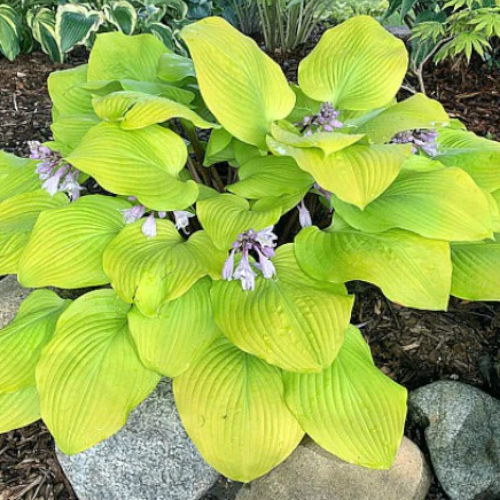
The Hosta 'Hotshot' is a vibrant, medium-sized perennial known for its striking combination of bright yellow foliage and deep red to purple petioles (stems). Hybridized by Dan Wols, this variety is prized for its ability to maintain its intense color throughout the growing season.
Physical Characteristics
- Foliage: According to Eurohosta, the leaves are rounded and deeply veined, measuring approximately 22 cm by 17 cm.
- Color: The leaves emerge yellow and glow brighter as the season progresses, providing a sharp contrast against "smoldering" red or bright purple stems.
- Flowers: Fertile, lavender-colored flowers bloom in late summer (July to August) on scapes reaching up to 60 cm.
- Size: At maturity, it typically reaches a height of 15 inches (approx. 40 cm) and a spread of 30 inches (approx. 75-80 cm).
Growing Requirements
- Hardiness Zones: Suitable for USDA zones 3 through 9.
- Light Exposure: Thrives in partial to dappled shade. While it is noted as "sun tolerant" by Rewela Hostas, it is best to avoid harsh afternoon sun to prevent leaf scorch.
- Soil: Prefers rich, loamy, well-draining soil with a slightly acidic pH (6.5 to 7.5).
- Watering: Requires consistent moisture, especially during the first two growing seasons. Established plants generally need about one inch of water per week.
Care and Maintenance
- Fertilization: Apply a well-balanced, slow-release fertilizer in the spring as new growth emerges. Compost can also be used as a yearly mulch to provide nutrients.
- Pruning: Remove spent flower stalks after blooming to redirect energy into the foliage. Cut back dead leaves to the ground after the first hard frost in late autumn to deter pests like slugs.
- Pest Management: Like most hostas, 'Hotshot' is susceptible to slugs and snails. Use barriers like copper tape or gravel to protect young plants.
- Toxicity Warning: According to Greg App, this plant is toxic to pets (cats and dogs) if ingested.