The Happy Hosta
Miss America Hosta
Regular price
$20.00 USD
Regular price
Sale price
$20.00 USD
Unit price
per
Shipping calculated at checkout.
Couldn't load pickup availability
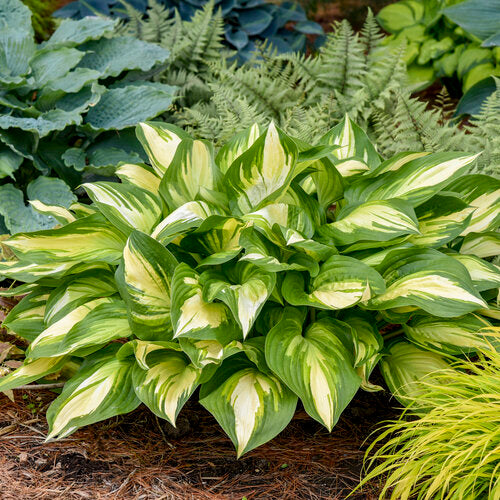
The 'Miss America' Hosta is a large, variegated perennial known for its striking green and white heart-shaped leaves and tall, hummingbird-attracting flowers. It is a 2025 National Hosta of the Year award winner, valued for its vigor and ability to thrive in shady garden areas.
Walters Gardens, Inc.
Key Characteristics
- Foliage: The plant features large, heart-shaped leaves with medium green margins surrounding a bold white center, accented by light green streaking. The leaves have a thick substance, offering some natural resistance to slugs.
- Flowers: In early to mid-summer, it produces impressive, near-white, tubular flowers with a subtle lavender pattern on tall, upright stems that can reach up to 5 feet (60 inches) in height. These blooms are particularly attractive to hummingbirds.
- Size: At maturity, the foliage forms a substantial mound about 19 inches tall and up to 55 inches wide.
Hardiness: It is hardy in USDA hardiness zones 3 through 9.
Planting & Care
- Light: The 'Miss America' Hosta performs best in a location with part shade to full shade (ideally 4-6 hours of sun, primarily morning sun). Hot afternoon sun should be avoided as it can scorch the leaves.
- Soil: It prefers fertile, moist, and well-drained soil with a slightly acidic to neutral pH. Amending the soil with organic matter like compost is beneficial for root aeration and nutrient supply.
- Watering: It requires consistent moisture, especially when establishing. Water regularly to keep the soil evenly moist, but avoid waterlogging. Once established, it has some tolerance for dry shade but performs best with consistent watering.
- Maintenance: Apply a slow-release, balanced fertilizer in early spring.
Clean away dead foliage after the first frost in early winter to prevent insect problems, such as slug and snail egg hiding spots. Division is generally not necessary for several years but can be done in early spring or late summer if desired.