The Happy Hosta
Moonlight Sanata Hosta
Regular price
$21.00 USD
Regular price
Sale price
$21.00 USD
Unit price
per
Shipping calculated at checkout.
Couldn't load pickup availability
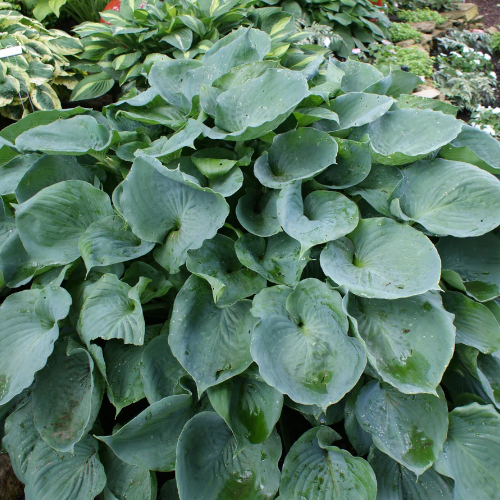
The Moonlight Sonata Hosta (Hosta 'Moonlight Sonata') is a medium-to-large perennial known for its thick, rubbery blue-green leaves and highly fragrant, near-white flowers. It is prized by gardeners for its vigorous growth and ability to quickly fill large gaps in shade gardens.
Physical Characteristics
- Foliage: The leaves start as an intense blue or silvery-blue in spring with a powdery glaucous coating. By mid-summer, they mature into a glossy green. The leaves are nearly round, slightly cupped, and develop a corrugated texture with maturity.
- Flowers: In mid-to-late summer, it produces fragrant, bell-shaped flowers that are near-white or pale lavender. These blooms sit on tall scapes reaching 30 to 40 inches high.
- Dimensions: At maturity, it typically reaches a height of 20–26 inches and a spread of 4 to 4.6 feet.
Ideal Growing Conditions
- Light: Prefers partial to full shade. It can handle some morning sun but should be protected from harsh afternoon sunlight to prevent leaf scorch.
- Soil: Highly tolerant of various soil types (including clay and sand) but performs best in rich, moist, and well-drained soil.
- Hardiness: It is hardy in USDA Zones 3–9, making it suitable for a wide range of climates.
- Resistance: The thick, rubbery texture of its leaves makes it notably slug-resistant compared to thinner-leaved hostas.
Planting and Care
- Planting: Best planted in the spring or fall. If starting with bareroot plants, soak the roots in water for 30 minutes before planting.
- Watering: Requires average but consistent moisture; it should not be allowed to dry out completely.
- Maintenance: Remove spent flower stalks to keep the plant tidy. In early spring, clean up dead foliage before new growth emerges.
- Fertilization: Apply a slow-release fertilizer or compost once per year in early spring as new leaves begin to appear.